

 Français
In a former goat shed at Le Châtelard, a craft microbrewery makes the most of local resources

 3 min read
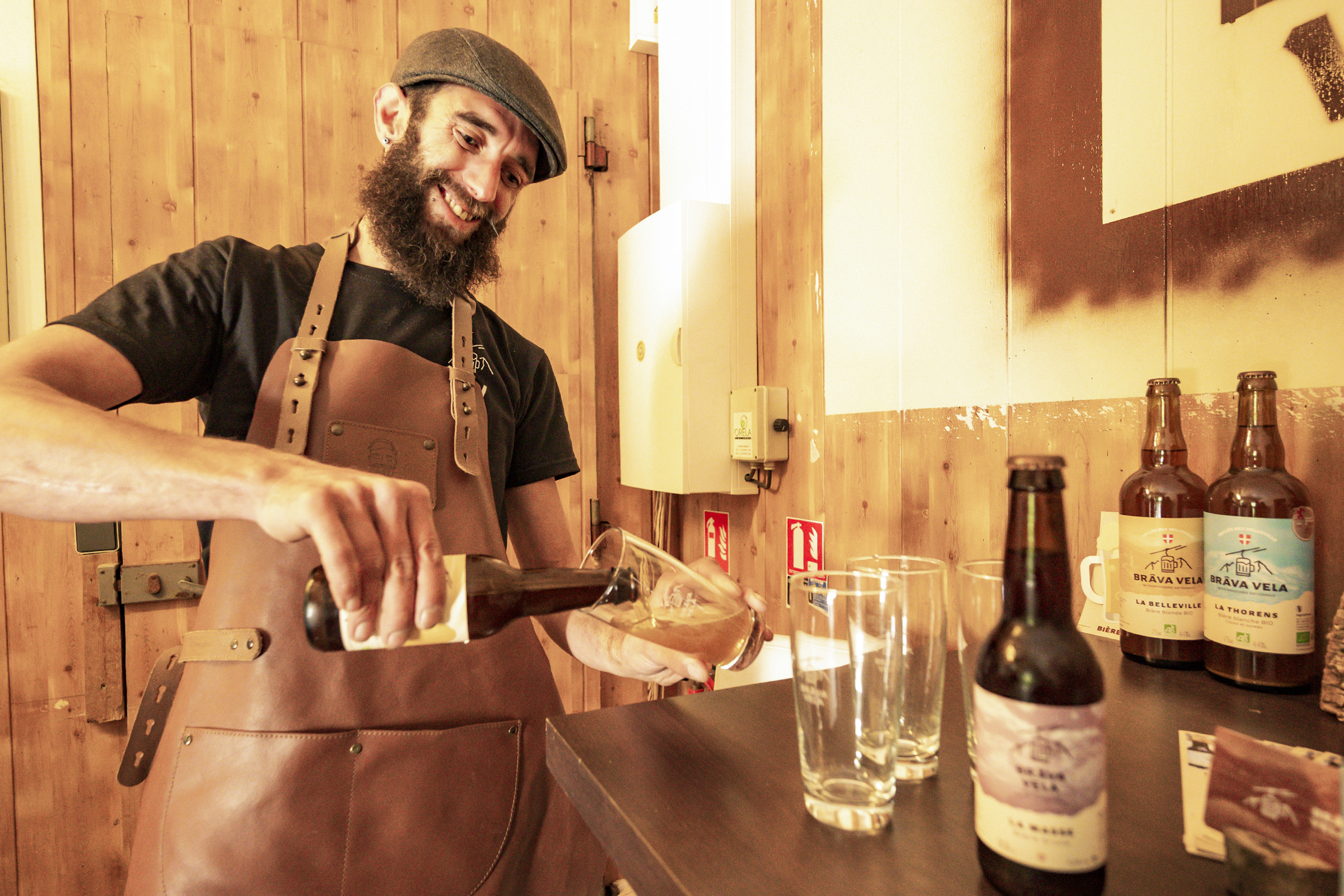
A former goat shed in the hamlet of Le Châtelard houses Brâva Vela, a craft microbrewery founded by Julien and Sophie Arto. Based in the Belleville valley, it makes beers from local, organic ingredients, in a declared commitment to authenticity and traditional brewing methods.
In this section
Images
By downloading content, you accept the terms of use.
Resources
By downloading content, you accept the terms of use.
A brewery born in a former goat shed in the hamlet of Le Châtelard
Brâva Vela occupies a former goat shed in the hamlet of Le Châtelard, reachable only by snowshoeing in winter. The brewery's name comes from the Savoyard dialect: "Bela Vela" or "Brâva Vela" means "the Belleville valley", a direct reference to the area in which it is based. The founders claim three values for their beers: commitment, authenticity and local know-how.
A craft, eco-conscious production process
According to the microbrewery, 97% of the ingredients used in production are locally sourced, including the malt, the hops and the water drawn from streams around the hamlet. Brâva Vela works with the Savoyard craft maltings Malt'inPott and with French hop growers, among them Houblons Du Moulin in the Ain. The brewery's water circuit is designed to cut energy use, and spent grain from brewing is recycled as animal feed by local farmers. Distribution relies on short supply chains, particularly to shops in Saint-Martin-de-Belleville, Les Menuires and Val Thorens.
Julien and Sophie Arto, the founders
Before founding Brâva Vela, Julien Arto worked in catering, where he developed an interest in culinary arts. He brewed his first beers while experimenting in his mother's kitchen. Sophie Arto, a trained doctor, brings a scientific approach to production at the brewery. This combination of culinary practice and biochemistry shapes how the microbrewery designs its recipes.
A range of beers inspired by the valley's landscapes
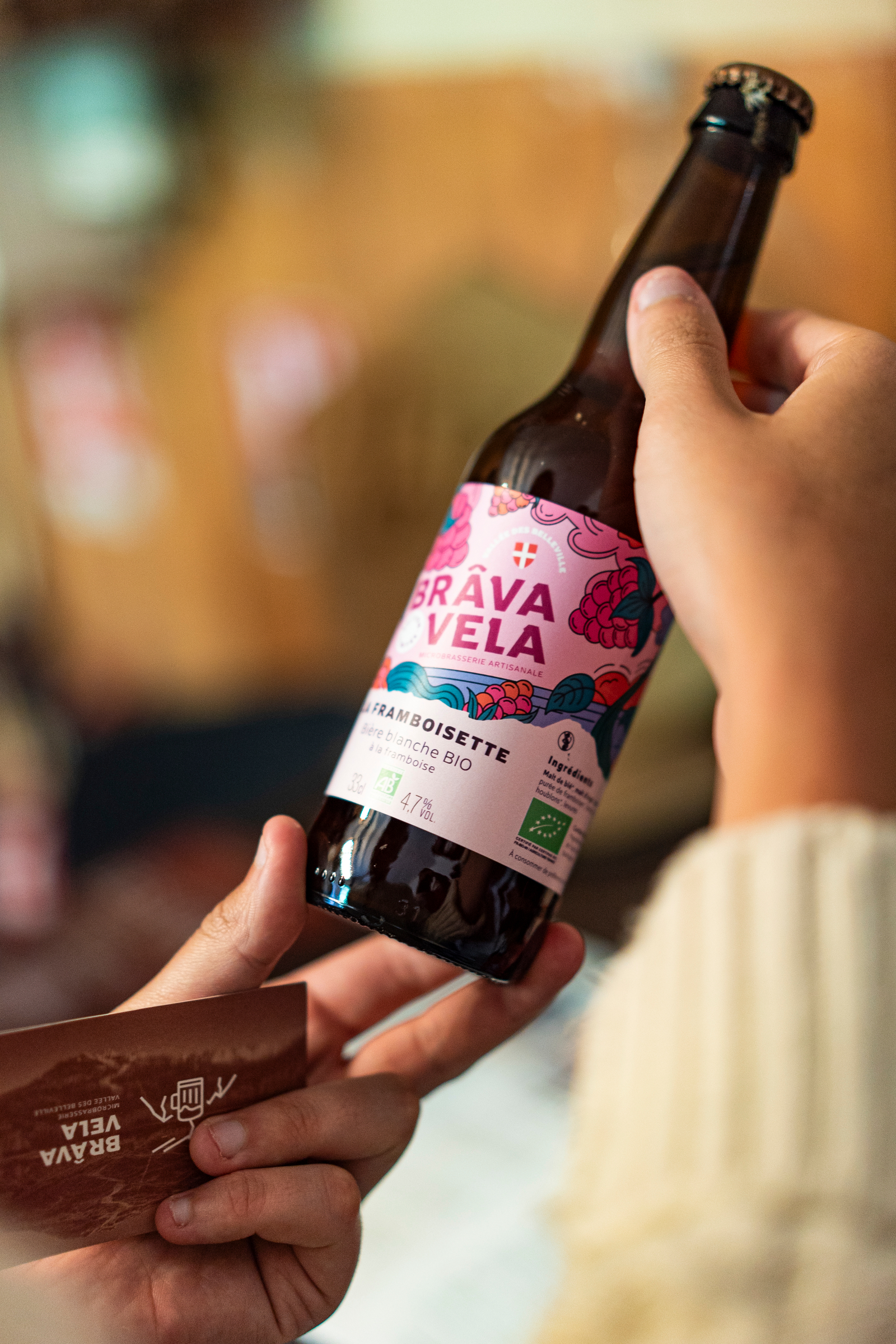
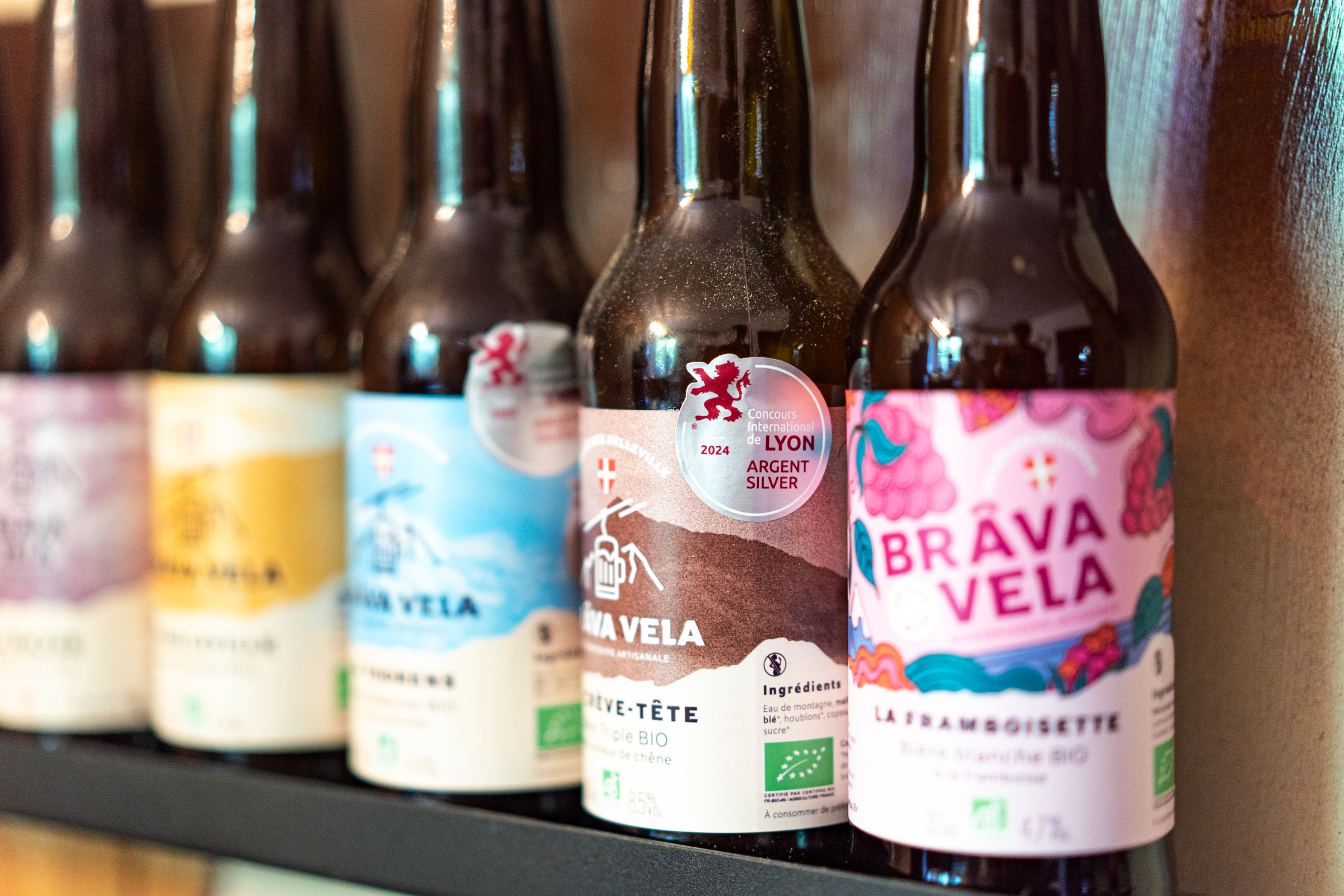
Brâva Vela's permanent range includes several beers named after the massifs surrounding the hamlet of Le Châtelard. La Belleville, a light, golden pale ale at 4.4% alcohol, is made from four types of malt and pairs with farmhouse chicken. La Thorens, a wheat beer with notes of lemon and elderflower, was awarded at the Lyon International Competition in 2023 and 2024; it accompanies fish dishes served with beurre blanc. La Masse is a dark beer with notes of coffee and chocolate, suited to cocoa-based desserts or a board of saucisson and Beaufort des alpages. IPA 1350, brewed at an altitude of 1,350 metres in Le Châtelard, is recommended with spicy dishes or as an aperitif. La Crève-Tête, a triple-fermented beer aged on oak chips, won the silver medal at the Lyon International Competition in 2024. The microbrewery also produces limited-edition seasonal beers, such as La Framboisette, a fruity wheat beer with raspberry, and La Fondante, a chocolate-raspberry stout.
Tours, workshops and the annual craft beer festival
Brâva Vela runs guided tours of the brewery's production methods. It also holds brewing workshops: under the supervision of Julien and Sophie Arto, participants create their own batch and leave with 20 litres of personalised beer. Each summer, the Fête de la bière artisanale in Saint-Martin-de-Belleville brings together tastings, workshops, activities, competitions and concerts over two days. In 2023, Julien and Sophie Arto won the public prize there for their pale ale, La Belleville.
Key points
- Brâva Vela microbrewery is based in a former goat shed in the hamlet of Le Châtelard, in the Belleville valley.
- 97% of the raw materials used for brewing are locally sourced.
- The brewery's wheat beer, La Thorens, was awarded at the Lyon International Competition in 2023 and 2024.
- The founders' brewing workshops send participants home with 20 litres of personalised beer.
- The Fête de la bière artisanale in Saint-Martin-de-Belleville, held every summer, awarded the brewery's founders the public prize in 2023.