

 Français
An immersive relief map brings 150 years of history to life in the Vallée des Belleville
-
 Heritage
-
 3 min read
In 2026, the museum dedicated to the history of the Vallée des Belleville introduced an immersive experience combining a relief map, videos and interactive projections. Housed in a former farmhouse at the heart of the village, it traces almost 150 years of daily life, from the harsh winters of the past to the rise of tourism and the creation of the ski resorts.
In this section
Images
By downloading content, you accept the terms of use.
Resources
By downloading content, you accept the terms of use.
A relief map at the heart of the museum
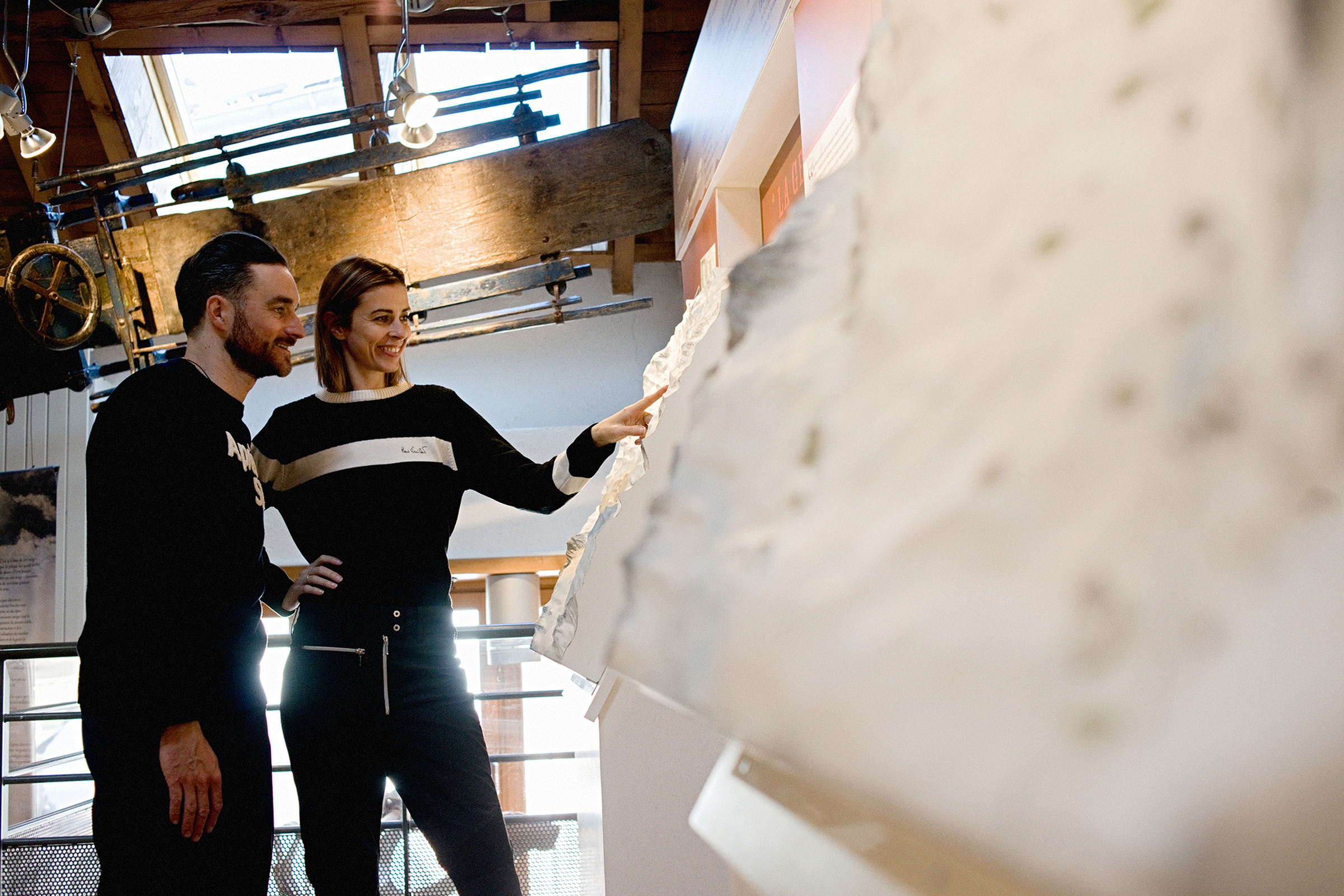
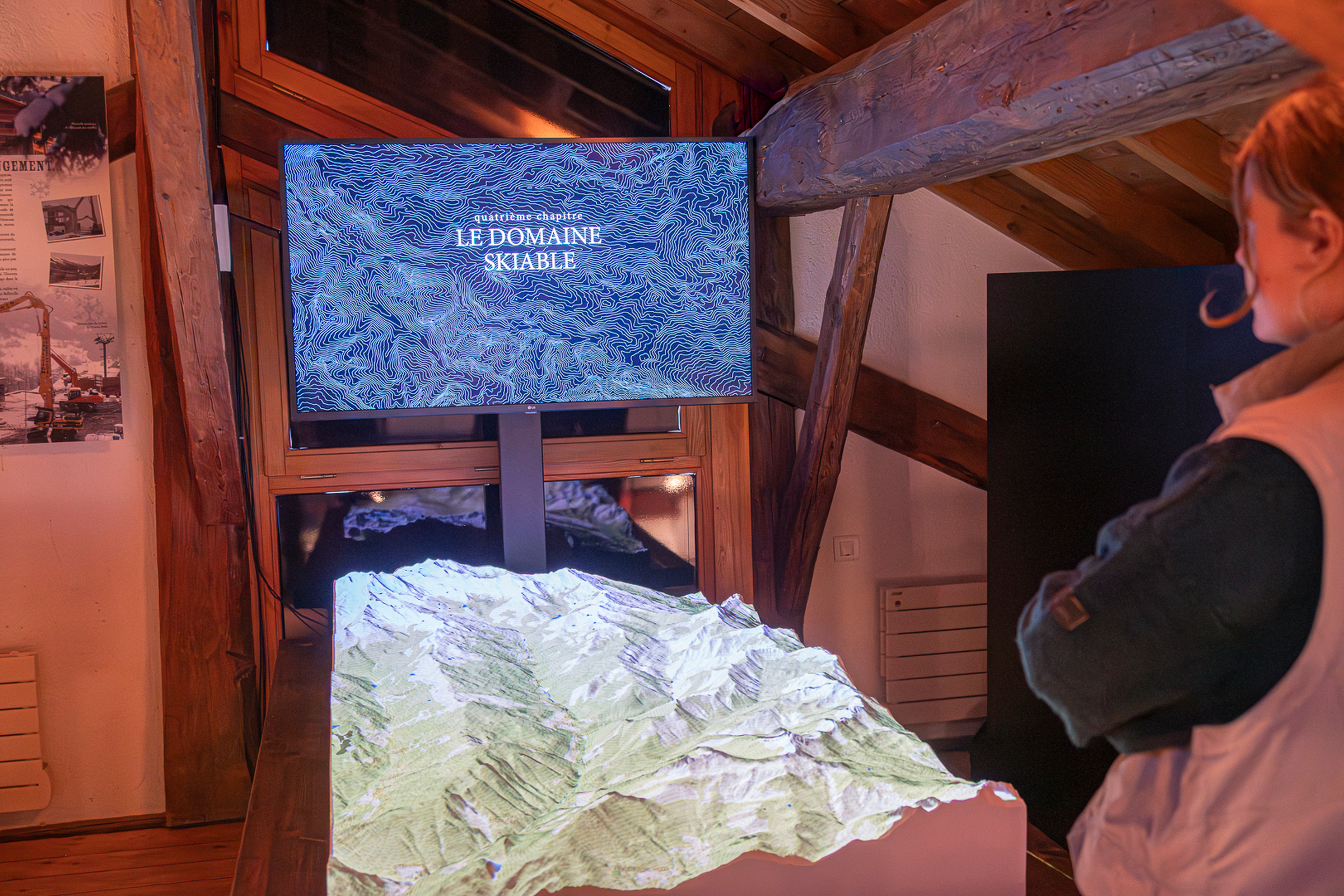
The installation unveiled in 2026 is built around a two-metre-long relief map of the Vallée des Belleville. Combined with videos and interactive projections, it lets visitors explore the area and its evolution through four scenarios: the landscape, the cycle of the seasons, human settlement and the history of the ski area. An intuitive interface controls the projections in French or English, in an educational and entertaining format. The story spans a period from the ice age to the recent transformations brought about by human activity.
A museum in constant evolution
Installed on the museum's mezzanine, the relief map was designed as an evolving display, with its themes able to be expanded and enriched over time. It forms part of a wider project to digitally modernise the visitor route. The cauldron display, devoted to Beaufort cheese-making, has been redesigned with projections and a fake LED fireplace. The cowshed also features a projection animating a fresco devoted to milking.
A farmhouse that recalls a bygone way of life
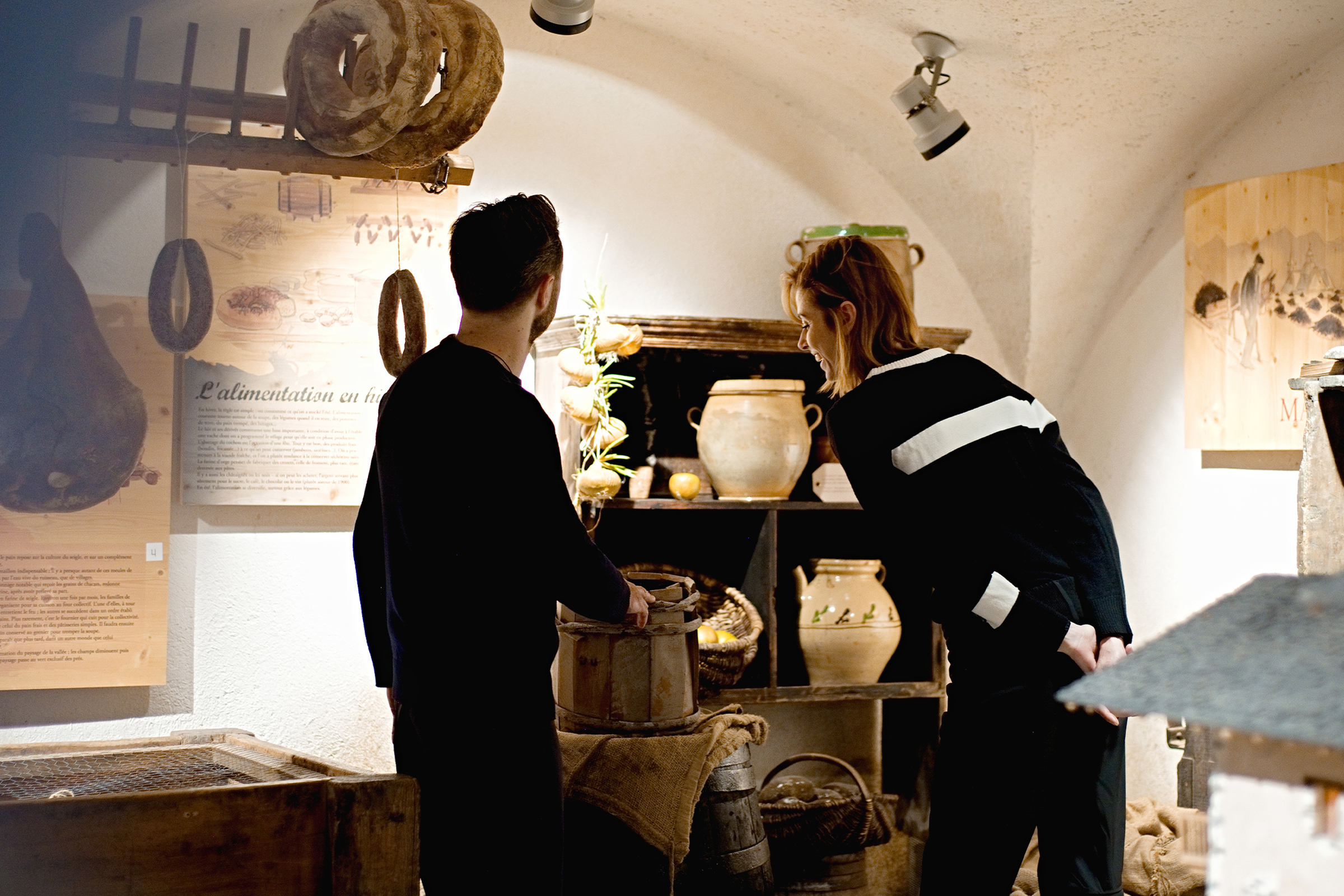
The visitor route, spread over four levels, begins in the basement, in the former winter house. Split into two parts, this space housed people on one side and their livestock on the other, used as a natural source of warmth. Grain, vegetables, meat and cheese were stored here to see the household through the winter, as Savoyard winters imposed particularly harsh living conditions. During this period, the Bellevillois made farm tools, wove wool and held evening gatherings, strengthening the family ties needed for summer work. From April, villagers dug, planted and sowed to ensure their self-sufficiency. June brought haymaking and the emmontagnée, the gradual move of livestock up to the mountain pastures, with each montagnette occupied for around 15 days. Milk, heated in cauldrons holding up to 500 litres, was used to make butter, cream and cheeses such as Sérac and Beaufort, with tools such as the verzhètes kept in the museum's collections.
150 years of the valley's history
The museum's first floor sets out the key dates in the valley's history since 1860, the year Savoie was joined to France. This period coincided with the Industrial Revolution, which drove many young people to leave the valley and work in Moutiers, where wages were higher. This movement led to a marked fall in the local population. The First World War in turn upended the agropastoral way of life, as men were called up while women alone carried out the farm work. The museum also recalls the Popular Front and the introduction of paid holidays in 1936, as well as the Second World War, during which residents hid Jewish children in the montagnettes — an episode remembered in the name of the Jérusalem run.
The birth of the winter sports resorts
In the 1960s and 1970s, several winter sports resorts sprang up in the valley under the Plan Neige programme, starting with Les Menuires in 1967, then Val Thorens in 1972–1973. The transformation did not happen without tension: families sought to preserve their heritage while investors bought up land cheaply. Saint-Martin-de-Belleville, the last resort created in the Vallée des Belleville, was linked to the Les 3 Vallées ski area during the 1980s. Its picturesque setting has since made it a popular holiday destination, valued for its calm, its character and the charm of a typical village — a spirit the museum sets out to recapture.
Key points
- A two-metre-long relief map, combined with videos and interactive projections, was installed in 2026 on the mezzanine of the museum dedicated to the Vallée des Belleville.
- The museum's visitor route, spread over four levels, traces almost 150 years of local history, from the traditional winter house to the rise of tourism.
- The summer transhumance of livestock to the mountain pastures, or *emmontagnée*, involved a stay of around 15 days in each *montagnette*, to let the grass grow back.
- Milk was processed in cauldrons holding up to 500 litres to make butter, cream and cheeses such as Sérac and Beaufort.
- Les Menuires opened in 1967 and Val Thorens in 1972–1973, as part of the *Plan Neige* programme to develop winter sports in the valley.